When you buy through links on our articles, Future and its syndication partners may earn a commission.

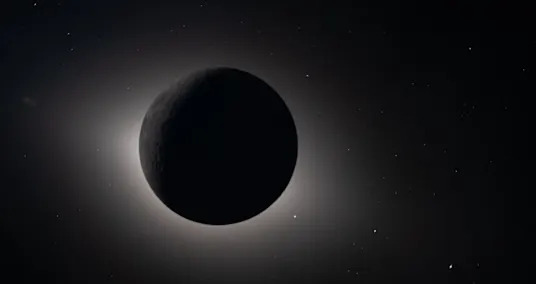
NASA's Artemis 2 astronauts have witnessed one of the rarest sights in spaceflight history — a total solar eclipse from beyond the moon.
The event unfolded yesterday (April 6) as the Orion spacecraft looped around the far side of the moon. This trajectory placed the crew in the right place at the right time to see the moon completely block the sun for about 53 minutes, which is far longer than the maximum period of totality for eclipses seen from Earth.
But it wasn't just the duration that made this eclipse extraordinary; it was the view.
NASA astronaut Victor Glover described the scene unfolding as the sun vanished behind the lunar disk.
"This continues to be unreal. The sun has gone behind the moon and the corona is still visible. It's bright and creates a halo almost around the entire moon," Glover said.
As darkness fell, another phenomenon quickly emerged. "When you get to the Earth side, the earthshine has already shown … almost seconds after the sun sets behind the moon, you can see earthshine," he added.
From Orion's windows, the crew was able to make out the faint glow of sunlight reflected off Earth, while stars and planets appeared in the background. The moon itself became a stark silhouette: "This black orb out in front of us," as Glover described it, edged by the glowing solar corona.

Though a rare sight, it's not the first time a solar eclipse has been viewed from lunar realms. The Apollo astronauts, who orbited the moon rather than flew by it (as Artemis 2 did), also saw solar eclipses, NASA's Kelsey Young, Artemis science flight operations lead, said during a press conference on Saturday (April 4).
The eclipse marks just one highlight in an already historic mission. Artemis 2 is the first crewed journey to the moon since Apollo 17 and has already set a new distance record for human spaceflight.
Following their impressive lunar flyby, the astronauts are now heading back toward Earth and are expected to splashdown on Friday (April 10) off the coast of San Diego.
LATEST POSTS
- 1
 AI is making spacecraft propulsion more efficient – and could even lead to nuclear-powered rockets
 - 2Astonishing Deserts All over The Planet You Really want To Visit
- 3December's overlooked meteor shower peaks next week — will the Ursids surprise us?
- 4German police 'cleared path for fascists with batons,' protesters say
- 5Medical team successfully delivers baby and removes massive tumor


- SpaceX's 1st 'Version 3' Super Heavy Starship booster buckles under pressure during initial tests
- Geminid meteors streak under green sky | Space photo of the day for Dec. 19, 2025
- New research reveals urban raccoons across the US show early signs of domestication
- Abbott issues US device correction for some glucose monitors over faulty readings risk
- After harsh winter, Ukrainians find joy in releasing bats rescued from war
- Hamas demanded displaced Gazans pay rent on beach tents amid torrential downpour, IDF reveals
- Pick Your Favored kind of salad
- 5 Different ways Macintosh is Prepared to Overwhelm Gaming, Even Against Windows
- 5 Critical Rules For Business Regulation Chiefs